


Essential details
Shipping:Express Delivery
Product Introduction
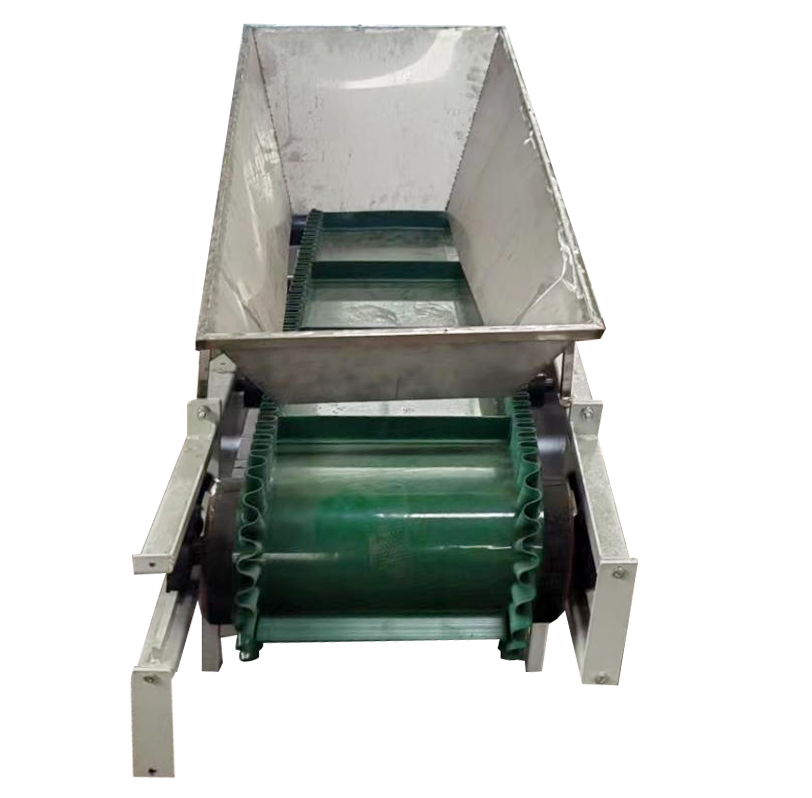
Belt Conveyor
Working Principle
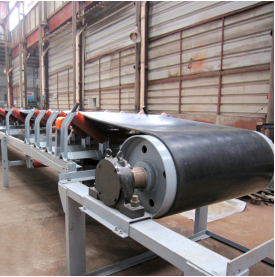
A belt conveyor mainly consists of two end pulleys and a closed conveyor belt tensioned on them. The pulley that drives the conveyor belt to rotate is called the drive pulley (or transmission pulley); the other pulley, which only changes the direction of the conveyor belt’s movement, is called the direction-changing pulley.
The drive pulley is driven by an electric motor via a reducer. The conveyor belt is dragged by the friction between the drive pulley and the belt. The drive pulley is usually installed at the discharge end to increase the traction force, which helps with dragging. Materials are fed from the loading end, fall onto the moving conveyor belt, and are transported to the discharge end by the friction of the conveyor belt.
Scope of Application
It can be used for horizontal or inclined transportation and is very easy to use. It is widely applied in various modern industrial enterprises, such as underground tunnels in mines, surface transportation systems in mines, open-pit mining sites, and ore dressing plants.
According to transportation process requirements, it can operate as a single unit, or multiple units can be combined (or paired with other conveying equipment) to form a horizontal or inclined conveying system, so as to meet the operation needs of different layout forms.
Technical Advantages
- Reliable operation: In many key production units that require continuous operation (e.g., coal transportation in power plants, bulk material transportation in steel plants and cement plants, and ship loading/unloading in ports), belt conveyors are adopted. Shutdowns in these scenarios would cause huge losses; belt conveyors can even operate continuously in shifts if necessary.
- Low power consumption: Since there is almost no relative movement between materials and the conveyor belt, the running resistance is small (only 1/3–1/5 of that of a scraper conveyor). It also causes less wear and breakage to the load, which helps improve production efficiency and reduce production costs.
- Flexible conveying route adaptability: The length of the conveying route can be set as needed—ranging from a few meters to over 10km. It can be installed in small tunnels or erected above areas with heavy traffic or dangerous terrain.According to process flow requirements, a belt conveyor can flexibly load materials from one or multiple points, or unload materials at multiple points or sections. When materials are loaded onto the conveyor belt from multiple points (e.g., conveyors under coal bunkers, or uniform feeders that supply materials to the conveyor belt at any point along its length), the belt conveyor becomes a main conveying line.
- Versatile material handling: Belt conveyors can retrieve materials from the tunnels under coal yards; if needed, they can also mix materials from different stockpiles. Materials can be simply unloaded from the conveyor head, or unloaded at any point along the conveyor belt length via a plow discharger or a mobile discharger.