


Essential details
Shipping:Express Delivery
Product Introduction
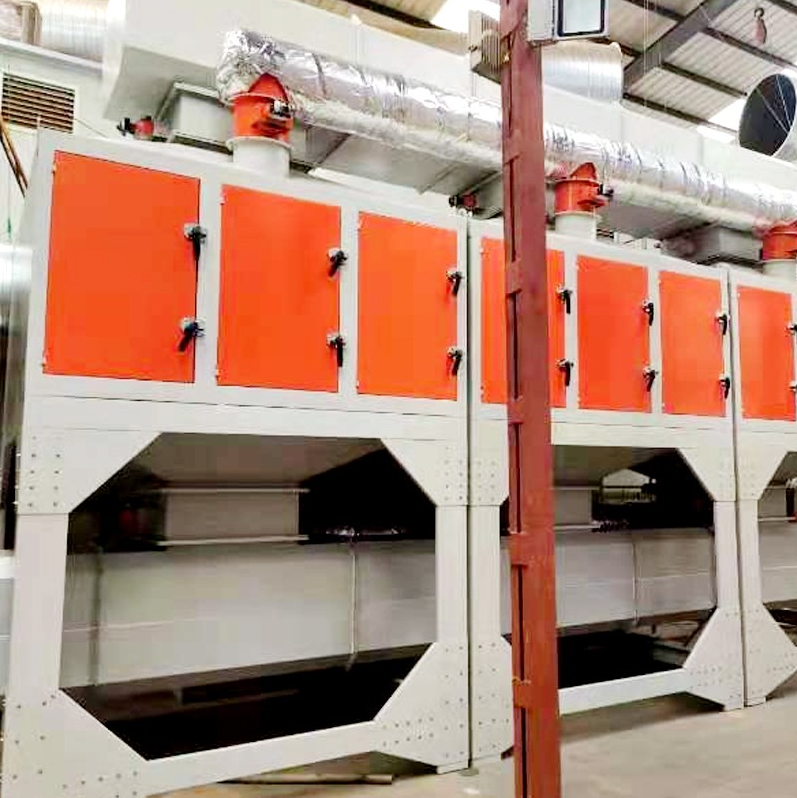
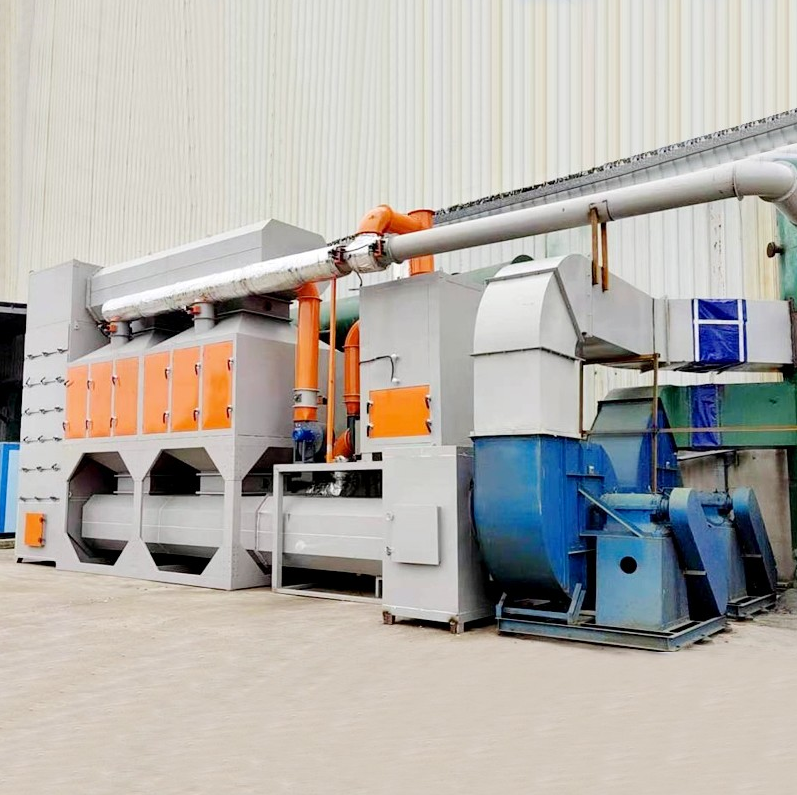
Catalytic combustion method, referred to as RCO, decomposes VOCs into CO₂ and H₂O at a low temperature of 200~400°C under the action of a catalyst. It is one of the effective methods to purify organic waste gases such as hydrocarbons and eliminate odors. It is widely used in organic waste gas purification, especially for organic waste gases with low recycling value, such as in industries like chemical engineering, spraying, insulation materials, enameled wire, and coating production.
Compared with the thermal combustion method, catalytic combustion requires less auxiliary fuel, has lower energy consumption, and smaller equipment volume. RCO combines the energy recovery feature of RTO (Regenerative Thermal Oxidizer) and the low-temperature operation advantage of catalytic reactions: the catalyst is placed on top of the regenerative material to optimize purification, with an energy recovery rate as high as 95%.
RCO Catalytic Combustion Working Principle
During industrial production, the discharged organic waste gas enters the device's rotary valve through a fan; the rotary valve completely separates the inlet and outlet gases. The gas passes through the ceramic material packing layer (bottom layer) for preheating, where heat storage and heat exchange occur, and its temperature nearly reaches the set temperature for catalytic oxidation in the catalyst layer (middle layer), at which point part of the pollutants are decomposed.
The waste gas continues to pass through the heating zone (upper layer, which can use electric heating or natural gas heating) to raise the temperature and maintain it at the set temperature. It then enters the catalyst layer to complete the catalytic oxidation reaction, generating CO₂ and H₂O and releasing a large amount of heat to achieve the expected treatment effect.
The catalytically oxidized gas enters other ceramic packing layers, recovers heat, and is discharged into the atmosphere through the rotary valve; the temperature of the purified exhaust gas is only slightly higher than that before treatment. The system operates continuously and switches automatically. Through the operation of the rotary valve, all ceramic packing layers complete the cyclic steps of heating, cooling, and purification, and heat is recovered.